
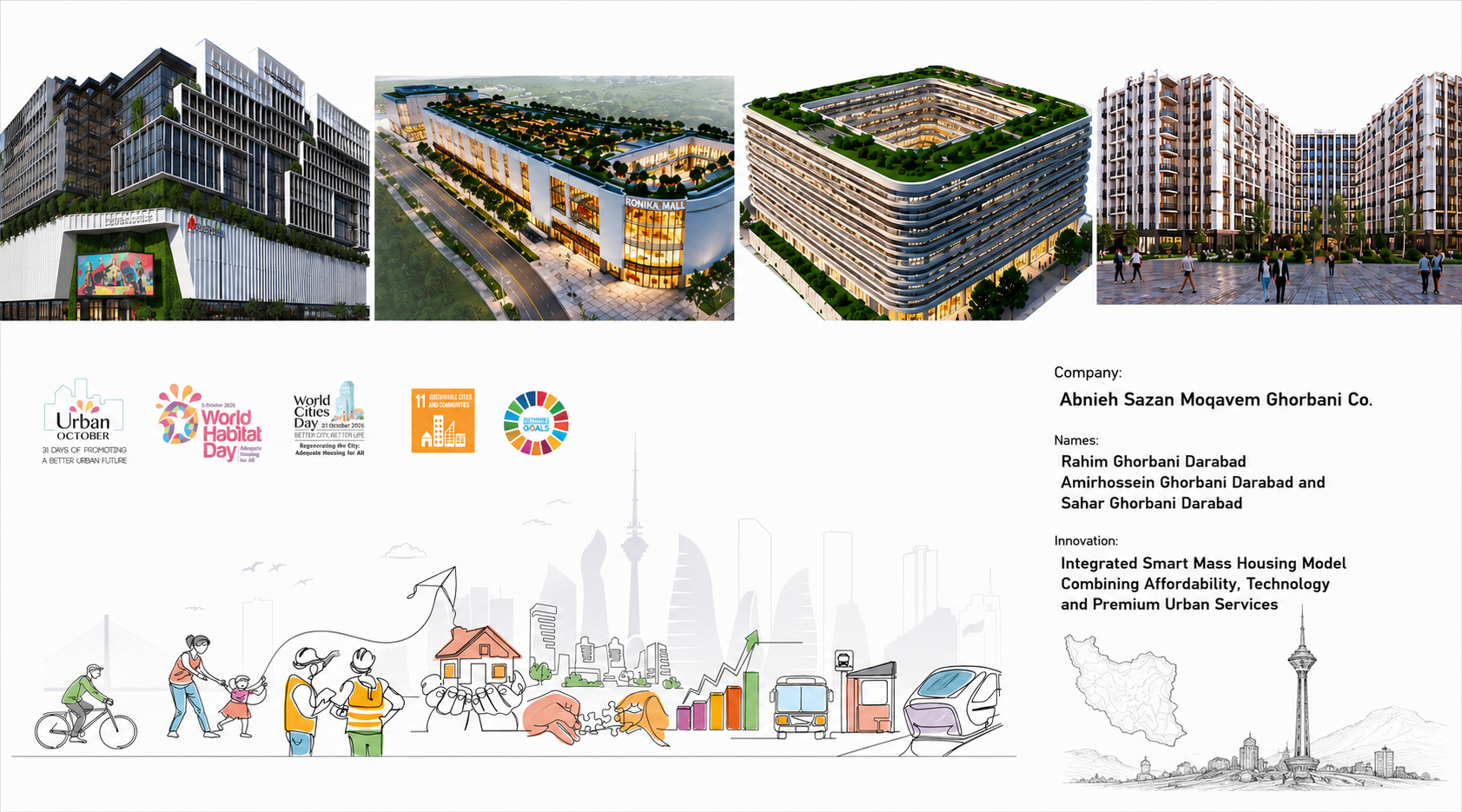
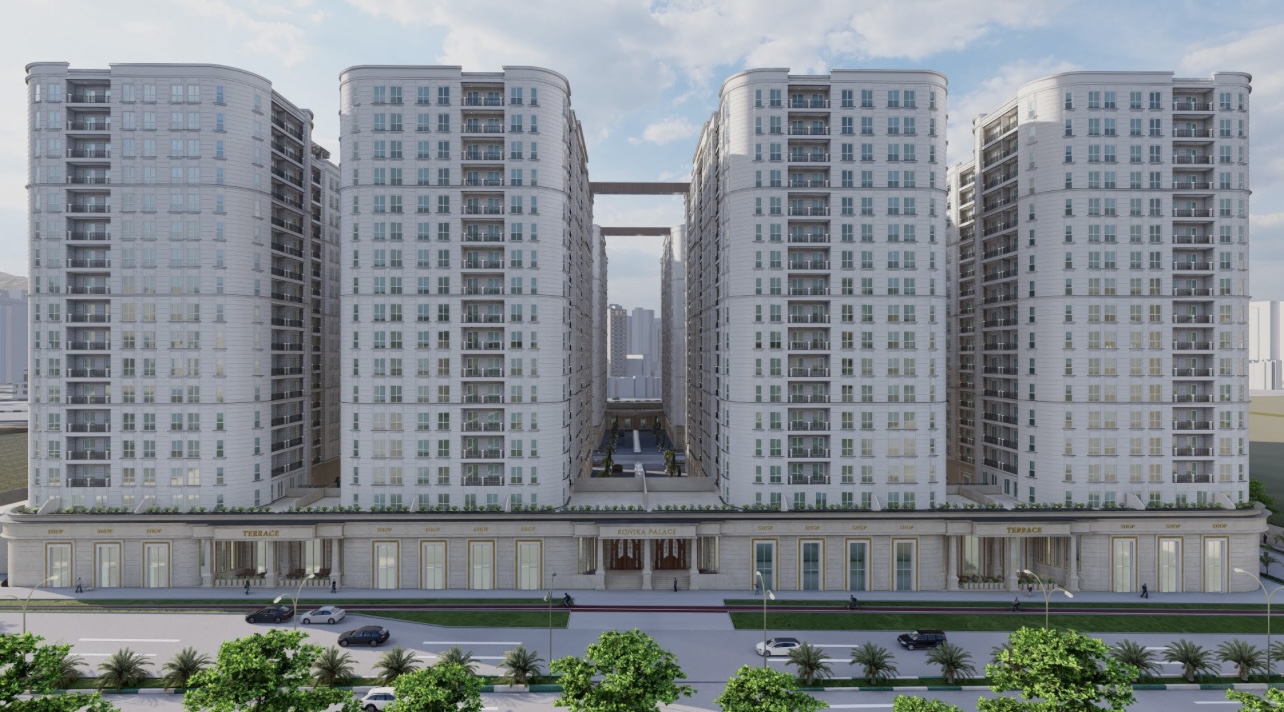
Ronika Palace Koohak is a landmark large-scale residential development in Tehran, comprising approximately 2,000 housing units across eight blocks and around 384,000 m² of built area. The project combines high-quality and affordable-oriented urban housing with hotel-style services, community amenities and integrated living facilities.
Developed at significant scale, the project seeks to create a beautiful, sustainable and inclusive living environment that enhances residents’ quality of life, wellbeing, accessibility and sense of belonging. Its integrated approach brings together architecture, residential services, shared amenities and urban infrastructure to support a connected and vibrant community.
The project contributes to the principles of sustainable urban development and SDG 11 by supporting access to adequate housing, inclusive communities, resilient urban development and improved living conditions. Its large-scale delivery also generates substantial employment and local economic value.
In line with the New European Bauhaus values of Beautiful, Sustainable and Together, the project seeks to balance architectural quality and user experience with environmental and economic sustainability, affordability, accessibility, social inclusion and community-oriented living. Its scale and integrated service model demonstrate the potential of large residential developments to create more liveable, resilient and people-centred urban environments.
As part of a broader evidence-based approach to sustainable urban development, Abnieh Sazan Moghavem Ghorbani Co., which includes the Ronika Palace Koohak project, has been examined as a national case study through an independently managed and multidisciplinary assessment process. The assessment brings together organizational data, supporting evidence, sector-specific knowledge and international assessment frameworks to examine the organization and its associated projects across multiple dimensions.
As part of this process, seven multidimensional assessments have been conducted, covering areas including building resilience (BRI – IFC), infrastructure and public-private partnership evaluation (PIERS – UNECE), MSME business capabilities (MSME Diagnostic – ITC), environmental and social management systems (ESMs FI Diagnostic – IFC), organizational resilience maturity (ReMA – UNDRR), building resource efficiency and sustainability (EDGE – IFC), and building innovation and smartness in relation to SDG 11 (New European Bauhaus – European Union). Together, these assessments examine organizational resilience, governance and capacity, business and operational capabilities, resource management, environmental and social sustainability, disaster and risk resilience, resource efficiency, building and infrastructure sustainability, innovation, inclusiveness and sustainable urban development.
The assessment approach is intended to provide an evidence-based foundation for identifying organizational strengths and resilience gaps, supporting knowledge development and informing improvement priorities and policy-oriented approaches to SDG 11. In particular, the organizational resilience component applies the UNDRR Resilience Maturity Assessment (ReMA) framework to structured organizational evidence, establishing a documented national case study in Iran. The methodology brings together organizational information, supporting documentation, relevant international reports and sector-specific knowledge to develop a structured evidence base for resilience assessment.
The resulting case study is documented within the UN Statistics Data Interoperability Guide and is designed as a transferable model that can be adapted for other organizations and projects in housing, construction, infrastructure and urban development. By connecting organizational resilience assessment with sustainable urban development, the approach seeks to support more resilient organizations, more resilient projects and better-informed approaches to the development of inclusive, safe, resilient and sustainable cities and communities in line with SDG 11.
In addition, Abnieh Sazan Moghavem Ghorbani Co., including the Ronika Palace Koohak project, has received the SDG 11 Innovation Award for sustainable urban development and the Affordable Housing Award as part of Urban October 2026. These recognitions are associated with the project’s focus on innovation, affordable housing, resilience and sustainable urban development in alignment with SDG 11.